Showing posts with label social media. Show all posts

Saturday, August 13, 2016

A Plea for Healthy Self-Skepticism


I've been thinking a lot about public discourse (or lack thereof) in the U.S. I've been thinking about how communication occurs in public, specifically on social media and news talk shows, by common folk, pundits, commentators, politicians, etc. I feel like all I see, hear, and read are people talking past one another. Words are coming out of people's mouths and keyboards, but little communication is happening.

I posted this on Facebook more than 16 months ago, right before going into a yearlong self-imposed Facebook exile:

I simply have difficulty being quiet when anyone (from either end of the social or political spectrum) makes complicated issues seem overly simple. It is difficult for me to hold my tongue when people make it seem as if they have a perfect understanding or perfect interpretation of things that really can’t really be understood or interpreted in neat little boxes. When we try to make complicated ideas seem simple and clear, we posit people of opposing (but potentially valid) ideas as fools, forces of evil, or run-of-the-mill assholes. Most aren't. Most are people who simply understand and interpret life differently. 
Most of my diatribes on Facebook or elsewhere come down to this: Things are complicated and people need to get it into their heads that these issues are not easy, nor are they clear. People of opposing views may be in error or they may not be, but they have ideas that are worth considering and are usually also well reasoned. To put it another way, people of opposing views may be wrong, but we don't have to dismiss them as idiots or jerks. I simply hope that people can start to have dialogue without being so damn sure of themselves all the time. 
To this end I pose questions. To this end I add contrary bits of information and opposing ideas. Do I have firm stances on some of these political and social issues? Sometimes. But, I'm not about to think I'm an expert or have expert knowledge enough to understand all these things clearly. For that matter, even honest-to-goodness experts don’t have completely clear pictures. This is what I hope other people learn as well, on this issue and almost any other divisive issue out there. Have some damn humility and understand that you don’t understand everything (and probably less than you think you do). I know I don't.
This thought catches my eye: "I simply hope that people can start to have dialogue without being so damn sure of themselves all the time." One of the major problems, as I see it, is that people lack a healthy self-skepticism. That is, whatever the reason (e.g. denial, pride, shame, fear, lack of awareness, embarrassment, machismo, ignorance, etc.), people are unwilling and/or unable to understand and/or admit that they don't know everything.

This poisons everything.

Go ahead. Doubt yourself a little. It's good for you.

I just like this picture. Isn't it cute!


Friday, July 29, 2016

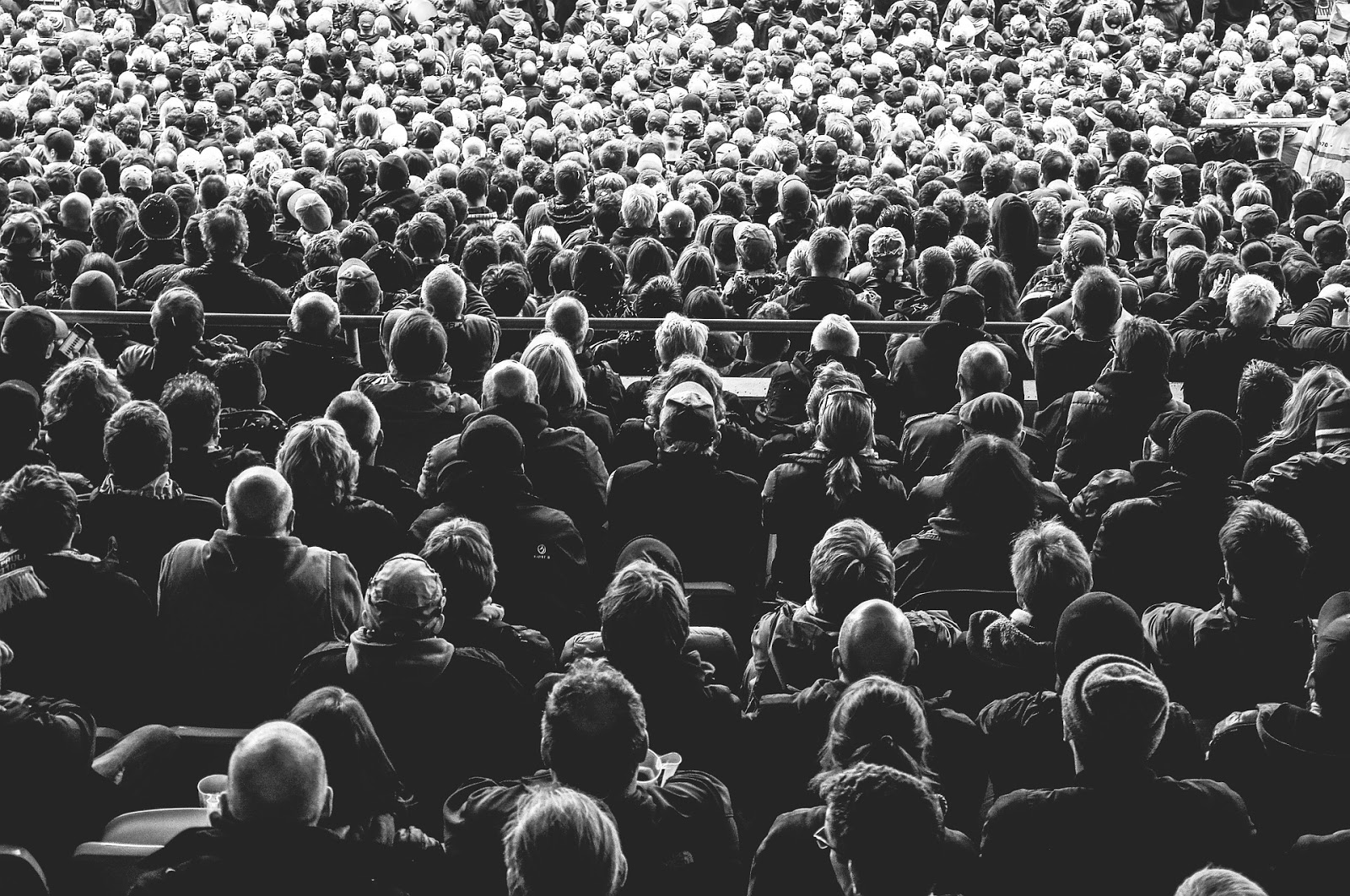
Crowd Theory and Social Media


The past few weeks have seen the passing of the both Republican National Convention and the Democratic National Convention. Many excellent speeches were made at both, regardless of whether I agreed with all, some, or none of the content.

But it got me thinking about what really goes into an excellent speech. (I'll give you a hint: It's not logic.) See this humorous compilation of examples from the RNC or this example from the DNC. (It's too soon for a compilation from the DNC. Maybe later.) UPDATE (Aug 2): Here is a compilation from the DNC (but it also contains an impassioned appeal against Trump).

Have any of you ever read about crowd theory? Probably not many of you have read Gustave Le Bon's The Crowd. It's an old book but still quite interesting. In it, Le Bon writes:
The characteristics of the reasoning crowds are the association of dissimilar things possessing a merely apparent connection between each other, and the immediate generalization of particular cases. It is arguments of this kind that are always presented to crowds by those who know how to manage them. They are the only arguments by which crowds are to be influenced. A chain of logical argumentation is totally incomprehensible to crowds, and for this reason it is permissible to say that they do not reason or that they reason falsely and are not to be influenced by reasoning. Astonishment is felt at times on reading certain speeches at their weakness, and yet they had an enormous influence of the crowds which listened to them, but it is forgotten that they were intended to persuade collectivities and not to be read by philosophers. An orator in intimate communication with a crowd can evoke images by which it will be seduced. If he is successful his object has been obtained, and twenty volumes of harangues -- always the outcome of reflection -- are not worth the few phrases which appealed to the brain it was required to convince.
Obviously this is just a snippet. Hopefully the ideas, divorced from the context as they are, still make sense. (As I know the book and the context, sometimes it is hard to know if the ideas presented are clear to the uninitiated.)

Then I got to thinking beyond the speeches. What about social media, a.k.a. internet 2.0?

Facebook, Twitter, Instagram and the whole lot of them are essentially large crowds. Memes (images divorced from reasoning) rule the day. We're constantly trolling for likes from those in agreement with us and ganging up on those that don't. We so quickly descend into personal insults and labels and cliches rather than truly engaging in reasoning.

Could it be that social media, rather than bring about a more educated populace, has simply helped us create mobs and coalitions, resistant to reflection, rejecting true thought?

It's an idea.